Japan Convenience Food Market: Growth Trends & Outlook 2025–2033
Japan Convenience Food Market Size and Forecast 2025–2033
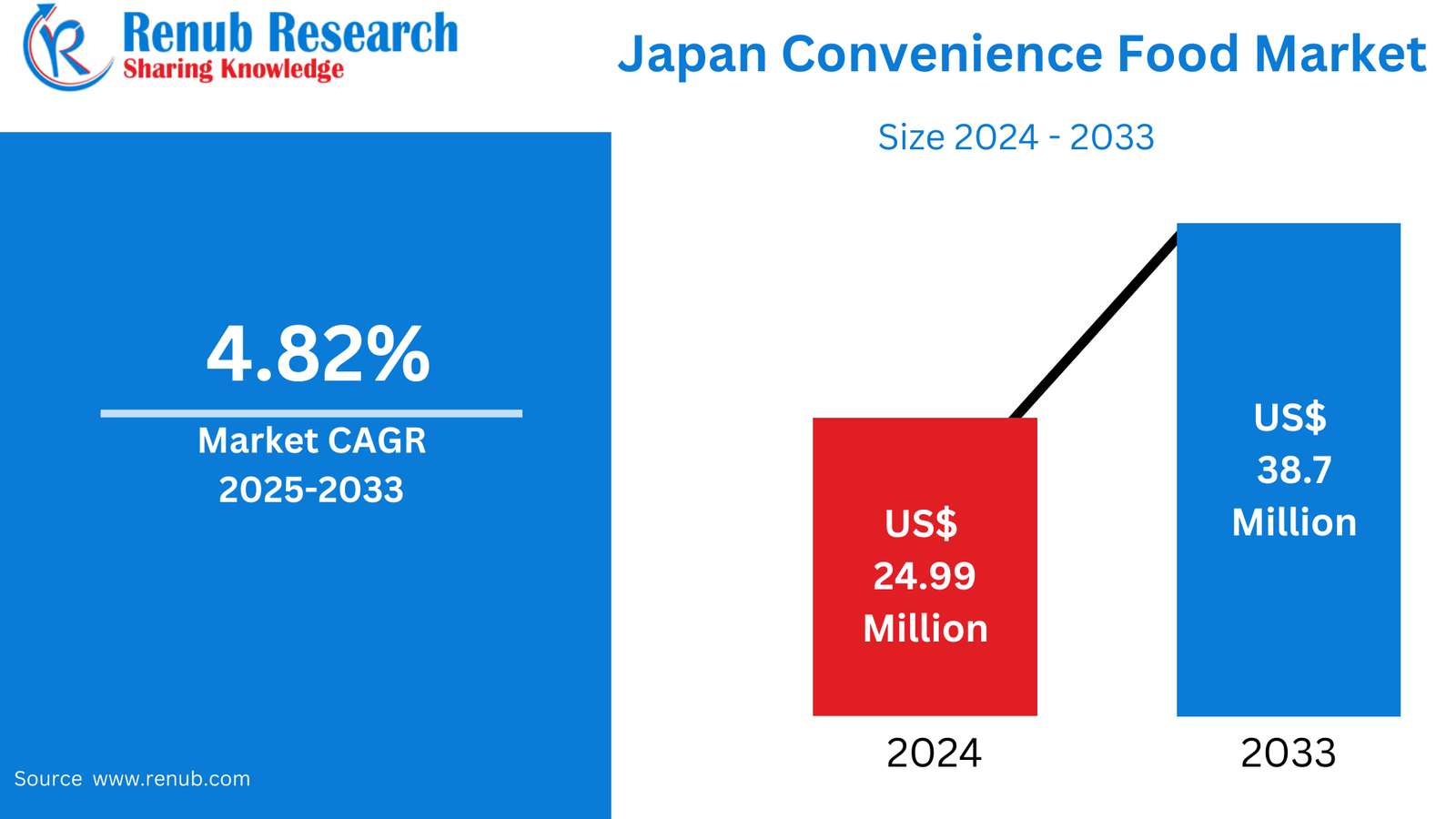
According to Renub Research Japan convenience food market is projected to grow steadily over the forecast period, reflecting changing lifestyles, demographic shifts, and the country’s strong retail infrastructure. The market was valued at US$ 24.99 billion in 2024 and is expected to reach US$ 38.7 billion by 2033, expanding at a compound annual growth rate (CAGR) of 4.98% from 2025 to 2033. Growth is primarily driven by rapid urbanization, an aging population, and increasingly hectic consumer lifestyles that favor easy-to-prepare or ready-to-eat food options.
Japan’s long-established culture of high-quality convenience foods—supported by an extensive network of convenience stores (konbini)—has made packaged meals, frozen foods, instant noodles, and bento boxes an everyday part of consumption. As work patterns evolve and household structures change, convenience food is shifting from being a supplementary option to a core dietary solution for millions of Japanese consumers.
Request a free sample copy of the report:https://www.renub.com/request-sample-page.php?gturl=japan-convenience-food-market-p.php
Japan Convenience Food Market Overview
Convenience food refers to packaged, pre-cooked, or partially prepared food products designed to minimize preparation time before consumption. This category includes ready-to-eat meals, frozen foods, instant noodles, canned products, snacks, and chilled foods. These products cater to consumers seeking speed, consistency, and ease without compromising taste or safety.
In Japan, convenience food holds a unique position due to the country’s demographic profile, cultural expectations around food quality, and sophisticated retail ecosystem. A large population of working professionals, students, and elderly consumers relies on convenience foods for daily meals. Japanese convenience stores—popularly known as konbini—offer a wide range of freshly prepared, nutritionally balanced, and portion-controlled meals such as rice bowls, sushi, salads, and desserts.
Japan’s emphasis on food safety, packaging innovation, and culinary precision ensures that convenience foods meet high standards of freshness and taste. Additionally, the country’s aging population increasingly prefers smaller, easy-to-digest meals, further reinforcing demand. As a result, convenience food has become deeply embedded in modern Japanese eating habits, extending beyond urban centers into suburban and regional markets.
Growth Drivers of the Japan Convenience Food Market
Urban Lifestyle and Time-Constrained Consumers
Japan’s fast-paced urban lifestyle is a major driver of convenience food demand. Long working hours, extended commuting times, and a growing number of single-person households have significantly reduced the time available for home cooking. Consumers increasingly rely on ready-to-eat meals and packaged foods as practical solutions for breakfast, lunch, and dinner.
The widespread availability of 24/7 convenience stores in cities such as Tokyo and Osaka further supports this trend. With easy access to affordable, high-quality food at any time of day, convenience food has become a daily necessity rather than an occasional alternative. Urban lifestyle pressures are expected to continue, ensuring consistent growth for the market.
Aging Population and Changing Dietary Needs
Japan’s rapidly aging population is reshaping food consumption patterns. Older consumers tend to prefer meals that are easy to prepare, portion-controlled, and tailored to specific nutritional needs. Frozen foods and pre-packaged ready meals are increasingly popular among seniors due to their convenience and reliability.
Food manufacturers are responding by developing low-sodium, high-fiber, and nutrient-balanced convenience foods suitable for elderly consumers. As the proportion of the population aged 65 and above continues to rise, demand for senior-friendly convenience food products is expected to become a key growth area within the market.
Technological Innovation in Food Processing and Packaging
Advancements in food processing and packaging technologies are enhancing the quality, safety, and shelf life of convenience foods in Japan. Techniques such as vacuum sealing, modified-atmosphere packaging, and microwave-safe containers help preserve freshness while improving ease of use.
Automation and artificial intelligence in food manufacturing are also improving production efficiency and enabling greater product customization. Smart labeling, clear nutritional information, and sustainable packaging solutions further increase consumer trust. Given Japan’s strong focus on food safety and innovation, technological progress continues to play a vital role in market expansion.
Challenges in the Japan Convenience Food Market
Health Concerns Related to Processed Foods
Despite their popularity, convenience foods often face criticism for high sodium levels, preservatives, and artificial additives. Health-conscious consumers—particularly younger demographics—are becoming more selective, seeking clean-label, natural, and nutritionally balanced products.
This shift places pressure on manufacturers to reformulate recipes, reduce salt and additives, and provide greater transparency in labeling. Companies that fail to adapt to these evolving health expectations risk losing consumer trust and market share.
Labor Shortages in Food Production and Retail
Japan’s shrinking workforce presents a significant challenge for convenience food manufacturers and retailers. Labor shortages affect food processing plants, logistics operations, and convenience stores, particularly in rural areas and during late-night shifts.
While automation and self-service technologies provide partial solutions, workforce constraints can disrupt supply chains and limit the ability to scale operations. Addressing labor shortages remains a critical challenge for maintaining consistent product availability and service quality.
Japan Ready-to-Eat Convenience Food Market
The ready-to-eat (RTE) segment dominates Japan’s convenience food market. Products such as rice bowls, sushi packs, sandwiches, salads, and instant noodles are staples in convenience stores, vending machines, and supermarkets.
The popularity of RTE foods stems from their freshness, taste, and immediate usability. Busy professionals and students frequently replace home-cooked meals with ready-to-eat options, ensuring stable demand. Continuous menu innovation, seasonal offerings, and regional flavors help maintain consumer interest and drive repeat purchases.
Japan Frozen Food Convenience Food Market
Frozen convenience foods are gaining momentum, particularly among dual-income households and elderly consumers. Products such as dumplings, fried rice, pasta, and frozen vegetables offer long shelf life, easy storage, and minimal preparation effort.
Advances in freezing technology have significantly improved texture and flavor retention, narrowing the gap between fresh and frozen foods. Frozen products also appeal to health-conscious consumers through portion control and reduced reliance on preservatives. The accelerated adoption of frozen foods during the pandemic has created lasting behavioral changes that continue to support growth in this segment.
Japan Convenience Food Market by Distribution Channel
Convenience Stores (Konbini)
Convenience stores form the backbone of Japan’s convenience food ecosystem. Major chains such as 7-Eleven Japan, FamilyMart, and Lawson operate thousands of outlets nationwide, offering freshly prepared meals around the clock.
These stores continuously innovate their food offerings, introducing seasonal and regional items while maintaining high standards of quality and presentation. Their integration of additional services such as bill payments, ATMs, and parcel delivery strengthens customer footfall and reinforces their central role in the convenience food market.
Online Retail
Online retail is an emerging growth channel for convenience food in Japan. Platforms such as Rakuten, Amazon Japan, and retailer-owned apps enable consumers to order ready meals, frozen foods, and snacks with home delivery.
This channel is particularly attractive to elderly consumers, busy professionals, and households seeking subscription-based meal solutions. While still secondary to physical convenience stores, online sales are expanding rapidly due to increasing mobile penetration and improved cold-chain logistics.
Regional and City-Level Insights
Tokyo Convenience Food Market
Tokyo is the largest and most influential convenience food market in Japan. High population density, limited kitchen space, and demanding work schedules drive strong demand for on-the-go meals. The city hosts the highest concentration of convenience stores and offers the widest variety of domestic and international convenience foods. Continuous culinary innovation and premium offerings characterize Tokyo’s market.
Aichi Convenience Food Market
Aichi Prefecture, home to Nagoya, benefits from a strong industrial base and a large working population. Demand is driven by office workers and factory employees who rely on bento lunches and convenience snacks. Suburban growth in Aichi also supports rising consumption of frozen and ready-to-eat meals for home dining.
Shizuoka Convenience Food Market
Shizuoka’s convenience food market is supported by commuters, tourists, and an aging population. Demand for fresh, health-oriented convenience foods aligns with the region’s lifestyle preferences. Improved cold-chain infrastructure is expanding the availability of frozen foods across both urban and rural areas.
Saitama Convenience Food Market
Saitama, a major suburban area near Tokyo, sees strong demand from daily commuters. Convenience foods serve as quick meal solutions for breakfast and dinner. Growing urbanization and expanding retail infrastructure continue to attract convenience store chains, supporting steady market growth.
Market Segmentation
By Product
Ready-to-eat
Frozen Food
By Distribution Channel
Supermarkets & Hypermarkets
Convenience Stores
Online Retail
Others
By City/Region
Tokyo
Kansai
Aichi
Kanagawa
Saitama
Hyogo
Chiba
Hokkaido
Fukuoka
Shizuoka
Competitive Landscape and Key Players Analysis
The Japan convenience food market is competitive, with both global and regional food manufacturers focusing on product innovation, health-oriented reformulation, and strategic partnerships with retailers. Companies are analyzed based on company overview, leadership, recent developments, SWOT analysis, and revenue performance.
Key players operating in the market include Nestlé S.A., Unilever PLC, General Mills Inc., Conagra Brands, Hormel Foods, The Kraft Heinz Company, Nomad Foods Ltd, and B&G Foods Inc..
Conclusion
The Japan convenience food market is set for stable and sustained growth through 2033, supported by urban lifestyles, an aging population, and a highly developed convenience retail ecosystem. While health concerns and labor shortages present challenges, ongoing innovation in food processing, packaging, and nutrition is helping manufacturers adapt to evolving consumer expectations. As convenience food remains deeply embedded in Japanese daily life, the market will continue to expand, balancing speed, quality, and health in one of the world’s most sophisticated food markets.
Comments
You must be logged in to comment.
Latest Articals
-

Faith, Healing, and Inner Change Through Inspirational Stories on Spiritual Growth
Spiritual growth rarely happens in comfort. It is often born in silence, struggle, guilt, doubt, and longing. In An Inward Journey, Peter Knoester walks through those very spaces. His reflections are not polished sermons or theological lectures. They are honest confessions, inner debates, prayers whispered in weakness, and meditations on eternity. Through his writing, readers encounter something deeply human: a soul wrestling with God, sin, redemption, and the mystery of existence.At its heart, this book offers inspirational stories on spiritual growth that unfold not through dramatic miracles, but through inward transformation. The author does not present himself as spiritually superior. Instead, he writes as someone aware of his flaws, haunted by his failures, and yet unwilling to stop seeking divine mercy. That honesty makes his reflections powerful and relatable.The Universal Longing for MeaningFrom the opening chapters, Knoester explores the shared human desire to connect with something beyond the material world. He...
-
99 Exchange Website | Smooth Access & Trusted Service at 99excha
IntroductionIn the fast pace of today’s digital world, users demand fast, secure and easy to use platforms. The 99 Exchange site shines through as a dependable place to get the best, whether you want to make sure you have the best experience or just want to pass through. Run by 99excha, this platform offers you performance, accessibility, and user trust — all in a single place. A Modern Platform Built for ConvenienceThe success of any online exchange platform depends on how easily users can access and interact with it. 99excha has developed the 99 Exchange website with a clean interface, fast-loading pages, and simple navigation tools. Whether you are a new visitor or a regular member, the layout ensures you can quickly find what you need without confusion.From streamlined menus to optimized mobile compatibility, every feature is built to support seamless browsing. The goal of 99excha is simple — provide smooth...
-
.jpg)
Birla Evara Sarjapur: Contemporary Skyline Living with Expansive Green Comfort
A modern home should offer more than just luxury—it should provide peace, connectivity, and thoughtfully designed spaces that enhance everyday life. Nestled in one of Bangalore’s most rapidly growing corridors, Birla Evara Sarjapur stands as a landmark residential township that perfectly blends urban sophistication with natural serenity. Spread across 25.71 acres, this premium development dedicates over 75% of its land to open spaces, creating a refreshing environment for residents.Designed under the LifeDesigned® philosophy, the township focuses on intelligent architecture, sustainable planning, and community-centric living. With high-rise towers, dual clubhouses, landscaped courtyards, and more than 25 lifestyle amenities, it sets a new benchmark for residential excellence on Sarjapur Road.A Prime Address in Bangalore’s Growth CorridorSarjapur Road has evolved into one of the city’s most sought-after residential zones. Its excellent connectivity to major IT parks and commercial hubs makes it ideal for professionals and families alike.Residents benefit from proximity to:Major IT corridorsOuter...
-

The Best Books on Leadership: Your Complete Guide to Building Trust, Strategy, and Integrity in Your Leadership Journey
Leadership is not defined by authority alone. It is revealed through decisions made under pressure, the ability to balance power with responsibility, and the courage to grow when control no longer works. Many leaders turn to the best books on leadership not to find shortcuts, but to understand how trust, strategy, and integrity can coexist. At the center of this conversation stands Machiavelli Mouse: A Search for Hybrid Wisdom by Phillip J. Velasquez—a leadership fable that reframes power as something to be carried wisely, not wielded blindly.This blog is written through the lens of Machiavelli Mouse, using its lessons as the foundation. Together, these lessons reflect why these types of books focus not on domination but on development.Why Machiavelli Mouse Belongs Among the Best Books on LeadershipMachiavelli Mouse earns its place among the best books because it addresses a problem many leaders face but rarely name: effectiveness without integrity eventually collapses. The story follows a...
-

A Guide to Fix QuickBooks Stuck on Installing ABS PDF Driver
If you are experiencing QBDT installation issues related to QuickBooks stuck on installing ABS PDF Driver, a missing or damaged driver most likely causes the issue. To resolve this, download and install the QuickBooks Tool Hub, then use it to run the QuickBooks Install Diagnostic Tool. In this blog, we will take a closer look at the potential causes of this error and walk you through detailed resolutions to resolve it. Understanding the Root Cause for Issues with ABS PDF Driver When Installing QBFirst, we need to explore and understand the reasons behind the ABS PDF driver when installing the application:If the QBW32.exe process is active while installing the drivers, it can interfere with and prevent successful installation Saving a file with the wrong extension or working on a file that is damaged or affected If the file does not have the required permissions or access to the specified location Security threats or issues...
-

Krishna Painting Trends: Radha Krishna Canvas Painting & Wall Painting Design by WallMantra
Spiritual art has always held a special place in Indian homes, and among all divine themes, Krishna painting continues to be the most cherished. Symbolizing love, harmony, and positivity, Radha Krishna artwork beautifully blends devotion with artistic elegance. From contemporary Radha Krishna Canvas Painting styles to thoughtfully crafted Radha Krishna Wall Painting Design trends, this form of art is evolving to match modern interiors.At WallMantra, we bring together tradition and design to create wall art that uplifts both your space and your spirit. Krishna Painting: Timeless Beauty with Spiritual MeaningA krishna painting is more than décor—it’s a symbol of divine love, compassion, and joy. Whether Krishna is depicted playing the flute, standing serenely by Radha, or surrounded by nature, each artwork creates a calming and positive ambiance.Why Krishna Paintings Are Always in Trend:They bring peace and spiritual energy into the homeThey suit both traditional and modern interiorsThey create an emotional...