Australia Infant Phototherapy Device Market: Industry Trends 2025–2033
Australia Infant Phototherapy Device Market Size and Forecast 2025–2033
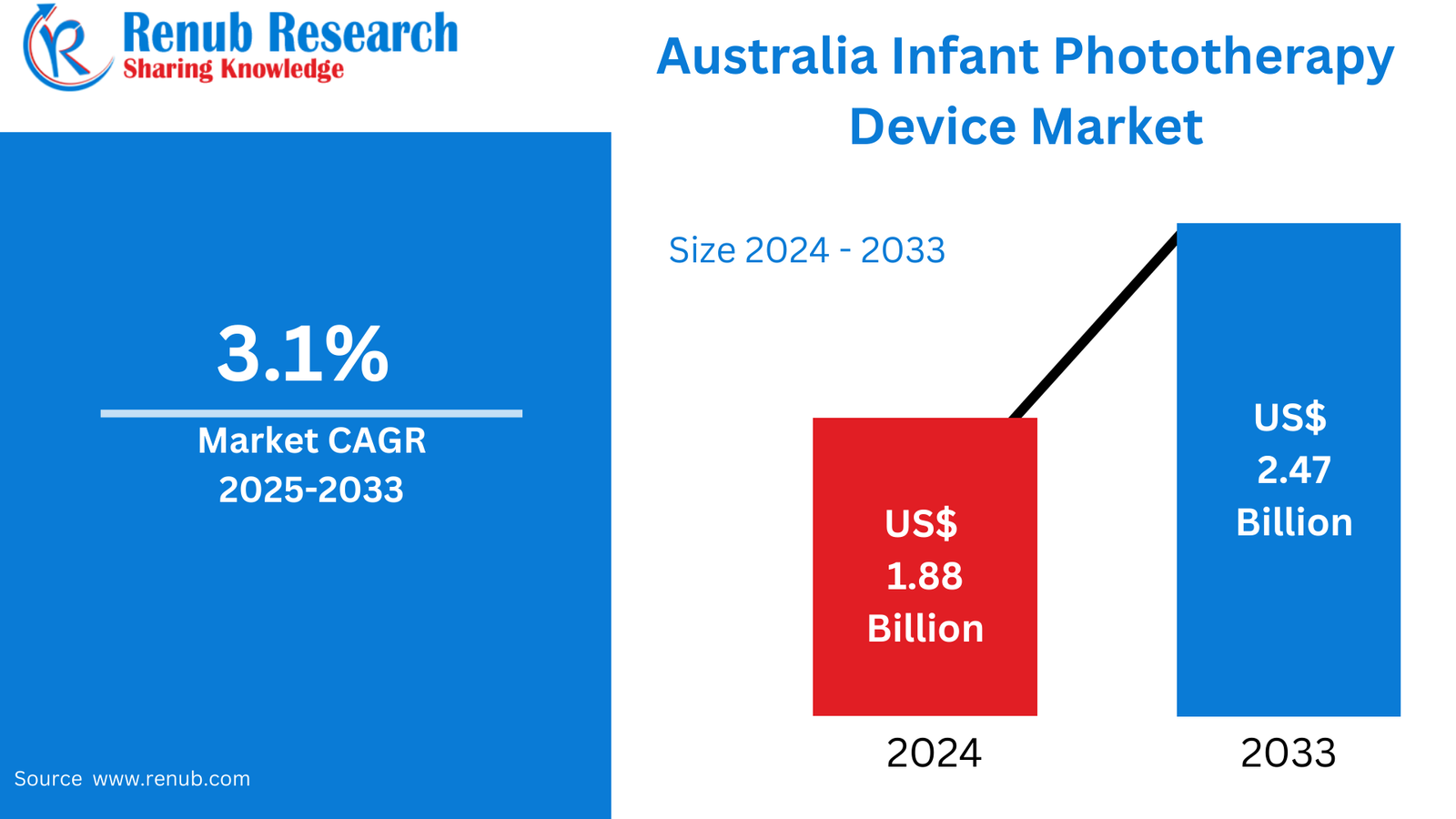
According to Renub Research Australia infant phototherapy device market is expected to grow steadily over the forecast period, reflecting the country’s strong neonatal care framework and rising focus on early infant health management. The market was valued at approximately US$ 1.88 billion in 2024 and is projected to reach around US$ 2.47 billion by 2033, expanding at a compound annual growth rate (CAGR) of 3.1% from 2025 to 2033.
This growth is primarily driven by the increasing prevalence of neonatal jaundice, improved screening practices at birth, and growing awareness among healthcare professionals and parents about the importance of early intervention. Technological progress in non-invasive phototherapy solutions, particularly LED-based systems, and continuous investment in neonatal intensive care units (NICUs) across Australia further support market expansion.
Australia Infant Phototherapy Device Market Outlook
Infant phototherapy devices are medical systems used to treat neonatal jaundice, a common condition caused by elevated bilirubin levels in newborns. These devices emit blue-spectrum light, typically in the wavelength range of 460–490 nm, which converts bilirubin into water-soluble forms that can be excreted naturally by the infant’s body. Phototherapy is widely regarded as a safe, non-invasive, and highly effective treatment when administered early.
In Australia, phototherapy devices are a standard component of neonatal care, particularly in maternity wards, hospitals, and NICUs. The country’s advanced healthcare infrastructure, routine newborn screening programs, and strong clinical guidelines ensure timely diagnosis and treatment of jaundice. LED-based phototherapy devices are increasingly preferred due to their energy efficiency, longer lifespan, reduced heat generation, and enhanced comfort for infants. Government initiatives aimed at improving neonatal outcomes and expanding healthcare access continue to promote the adoption of advanced phototherapy technologies nationwide.
Request a free sample copy of the report:https://www.renub.com/request-sample-page.php?gturl=australia-infant-phototherapy-device-market-p.php
Growth Drivers in the Australia Infant Phototherapy Device Market
Increasing Prevalence of Neonatal Jaundice
Neonatal jaundice is one of the most frequently diagnosed conditions in newborns across Australia, often associated with prematurity or underdeveloped liver function. Hospitals and neonatal clinics prioritize early detection and treatment to prevent serious complications such as kernicterus.
With universal newborn screening becoming more widespread, a higher number of cases are being identified at an early stage, driving demand for phototherapy devices. Increased awareness among parents and caregivers regarding jaundice symptoms and treatment options further supports market growth. The steady number of annual births in Australia ensures a consistent need for neonatal jaundice management solutions.
Advancements in Phototherapy Device Technology
Technological innovation is a key driver of the Australia infant phototherapy device market. Modern systems incorporate LED light sources, fiber-optic phototherapy blankets, and adjustable intensity controls that improve treatment efficiency and patient safety. These advancements offer better bilirubin reduction, lower energy consumption, and enhanced portability compared to older technologies.
Australian hospitals are actively replacing traditional fluorescent-based units with LED-based systems, particularly in urban centers. Portable and mobile phototherapy devices are also gaining traction, supporting flexible use across wards and outreach programs. Continuous product innovation is improving clinical outcomes while reducing operational costs, encouraging broader adoption.
Government Support and Strong Healthcare Infrastructure
Australia’s well-developed public healthcare system plays a crucial role in supporting the infant phototherapy device market. Government funding, public hospital procurement programs, and investments in maternal and neonatal health ensure widespread availability of phototherapy equipment.
Training initiatives for healthcare professionals further enhance effective device utilization and patient outcomes. In addition, policies aimed at improving rural and remote healthcare access help expand the reach of neonatal treatment services, contributing to steady market growth across both metropolitan and regional areas.
Challenges in the Australia Infant Phototherapy Device Market
High Equipment Costs and Budget Constraints
Despite technological benefits, the high cost of advanced phototherapy systems—especially LED-based units—poses a challenge for smaller hospitals, neonatal clinics, and rural healthcare facilities. Budget limitations may delay equipment upgrades or result in continued reliance on older devices with lower efficiency.
Uneven procurement practices across regions can also lead to disparities in access to modern phototherapy solutions. These financial constraints may slow market penetration in cost-sensitive settings unless supported by targeted funding or centralized purchasing programs.
Limited Access in Remote and Indigenous Communities
Geographical disparities in healthcare access remain a significant challenge in Australia. Remote and Indigenous communities often lack immediate access to well-equipped neonatal units and phototherapy devices. In such cases, newborns may need to be transferred to larger hospitals, causing treatment delays and increasing health risks.
Addressing this gap requires investment in mobile phototherapy units, improved transport infrastructure, and trained healthcare staff to deliver timely care in underserved regions. Overcoming these challenges is essential for achieving equitable neonatal healthcare outcomes nationwide.
Australia Infant Phototherapy Device Market by Light Source
Fluorescent Lamps Segment
Fluorescent lamp-based phototherapy devices were historically the standard in neonatal wards. While they remain more affordable upfront, these systems generate more heat and require frequent bulb replacement, leading to higher maintenance costs. Their use is gradually declining in urban hospitals but continues in some rural or budget-constrained facilities.
Light Emitting Diodes Segment
LED-based phototherapy devices dominate the modern Australian market. They offer superior energy efficiency, longer operational life, lower heat output, and improved treatment consistency. These advantages make LED systems the preferred choice in hospitals and neonatal clinics, supporting strong growth in this segment.
Australia Infant Phototherapy Device Market by Configuration
Mobile Devices
Mobile phototherapy devices provide flexibility and convenience, particularly in space-limited neonatal units and rural outreach programs. Their portability enables use across multiple locations and supports decentralized neonatal care. Mobile units are also suitable for supervised home-care settings, increasing their importance in expanding access to treatment.
Fixed Devices
Fixed phototherapy devices are commonly installed in NICUs and maternity wards of large hospitals. They provide stable, high-intensity treatment suitable for high patient volumes. While less flexible than mobile units, their durability and consistent performance make them a preferred option in established neonatal care centers.
Australia Infant Phototherapy Device Market by End User
Hospitals
Hospitals represent the largest end-user segment due to the high number of births and the presence of NICUs. Public and private hospitals prioritize investment in advanced phototherapy systems to ensure early intervention and improved neonatal outcomes. Government support and standardized neonatal care protocols further drive demand in this segment.
Neonatal Clinics
Neonatal clinics also contribute significantly to market demand, particularly for mobile and compact phototherapy devices. These facilities play a key role in early diagnosis and treatment, especially in regional areas where access to large hospitals may be limited.
Regional Outlook: Australia Infant Phototherapy Device Market
Victoria
Victoria holds a significant share of the market due to its dense population and advanced healthcare infrastructure. Major cities such as Melbourne host well-equipped hospitals and neonatal centers that continuously invest in state-of-the-art phototherapy technology. Public health initiatives focused on maternal and child health further sustain demand across the state.
Queensland
Queensland’s large geographic area creates strong demand for both fixed and mobile phototherapy devices. While urban centers such as Brisbane have advanced pediatric facilities, rural and remote regions increasingly rely on portable and LED-based systems to improve access to neonatal care. Government funding and outreach programs support continued market growth.
Tasmania
Despite its smaller population, Tasmania maintains high healthcare standards. Hospitals in Hobart and Launceston are equipped with modern phototherapy systems, while mobile devices are used to serve smaller communities. State-supported rural outreach programs contribute to consistent demand across the region.
Western Australia
Western Australia’s vast and remote landscape presents logistical challenges for neonatal care. Urban hospitals in Perth are well-equipped, while mobile phototherapy units are increasingly deployed to serve remote and Indigenous communities. Ongoing focus on maternal health and rural healthcare access supports sustained demand for flexible phototherapy solutions.
Market Segmentation
By Light Source
Fluorescent Lamps, Light Emitting Diodes, Quartz Halogen Lamps, Gas Discharge Tubes
By Configuration
Mobile Device, Fixed Device
By End User
Hospitals, Neonatal Clinics
By Geography
New South Wales, Victoria, Queensland, Western Australia, South Australia, Australian Capital Territory, Tasmania, Northern Territory
Competitive Landscape and Key Players
The Australia infant phototherapy device market features a mix of global and regional medical device manufacturers focusing on innovation, safety, and energy efficiency. Key players operating in the market include Koninklijke Philips N.V., General Electric Company, Drägerwerk AG & Co. KGaA, Natus Medical Incorporated, Ningbo David Medical Device Co., Ltd, Inspiration Healthcare Group Plc, Weyer GmbH, and Ibis Medical Equipment and Systems Pvt Ltd.
These companies compete on product performance, safety standards, innovation, and after-sales support, while aligning with Australia’s strict regulatory and clinical requirements.
Conclusion
The Australia infant phototherapy device market is set for steady growth through 2033, underpinned by rising neonatal jaundice incidence, technological advancements, and strong government support for maternal and child healthcare. While challenges related to equipment cost and access in remote regions persist, continued investment in mobile and LED-based solutions is improving treatment reach and outcomes. As Australia maintains its focus on early intervention and neonatal care excellence, infant phototherapy devices will remain a critical component of the country’s healthcare landscape.
Comments
You must be logged in to comment.
Latest Articals
-

Faith, Healing, and Inner Change Through Inspirational Stories on Spiritual Growth
Spiritual growth rarely happens in comfort. It is often born in silence, struggle, guilt, doubt, and longing. In An Inward Journey, Peter Knoester walks through those very spaces. His reflections are not polished sermons or theological lectures. They are honest confessions, inner debates, prayers whispered in weakness, and meditations on eternity. Through his writing, readers encounter something deeply human: a soul wrestling with God, sin, redemption, and the mystery of existence.At its heart, this book offers inspirational stories on spiritual growth that unfold not through dramatic miracles, but through inward transformation. The author does not present himself as spiritually superior. Instead, he writes as someone aware of his flaws, haunted by his failures, and yet unwilling to stop seeking divine mercy. That honesty makes his reflections powerful and relatable.The Universal Longing for MeaningFrom the opening chapters, Knoester explores the shared human desire to connect with something beyond the material world. He...
-
99 Exchange Website | Smooth Access & Trusted Service at 99excha
IntroductionIn the fast pace of today’s digital world, users demand fast, secure and easy to use platforms. The 99 Exchange site shines through as a dependable place to get the best, whether you want to make sure you have the best experience or just want to pass through. Run by 99excha, this platform offers you performance, accessibility, and user trust — all in a single place. A Modern Platform Built for ConvenienceThe success of any online exchange platform depends on how easily users can access and interact with it. 99excha has developed the 99 Exchange website with a clean interface, fast-loading pages, and simple navigation tools. Whether you are a new visitor or a regular member, the layout ensures you can quickly find what you need without confusion.From streamlined menus to optimized mobile compatibility, every feature is built to support seamless browsing. The goal of 99excha is simple — provide smooth...
-
.jpg)
Birla Evara Sarjapur: Contemporary Skyline Living with Expansive Green Comfort
A modern home should offer more than just luxury—it should provide peace, connectivity, and thoughtfully designed spaces that enhance everyday life. Nestled in one of Bangalore’s most rapidly growing corridors, Birla Evara Sarjapur stands as a landmark residential township that perfectly blends urban sophistication with natural serenity. Spread across 25.71 acres, this premium development dedicates over 75% of its land to open spaces, creating a refreshing environment for residents.Designed under the LifeDesigned® philosophy, the township focuses on intelligent architecture, sustainable planning, and community-centric living. With high-rise towers, dual clubhouses, landscaped courtyards, and more than 25 lifestyle amenities, it sets a new benchmark for residential excellence on Sarjapur Road.A Prime Address in Bangalore’s Growth CorridorSarjapur Road has evolved into one of the city’s most sought-after residential zones. Its excellent connectivity to major IT parks and commercial hubs makes it ideal for professionals and families alike.Residents benefit from proximity to:Major IT corridorsOuter...
-

The Best Books on Leadership: Your Complete Guide to Building Trust, Strategy, and Integrity in Your Leadership Journey
Leadership is not defined by authority alone. It is revealed through decisions made under pressure, the ability to balance power with responsibility, and the courage to grow when control no longer works. Many leaders turn to the best books on leadership not to find shortcuts, but to understand how trust, strategy, and integrity can coexist. At the center of this conversation stands Machiavelli Mouse: A Search for Hybrid Wisdom by Phillip J. Velasquez—a leadership fable that reframes power as something to be carried wisely, not wielded blindly.This blog is written through the lens of Machiavelli Mouse, using its lessons as the foundation. Together, these lessons reflect why these types of books focus not on domination but on development.Why Machiavelli Mouse Belongs Among the Best Books on LeadershipMachiavelli Mouse earns its place among the best books because it addresses a problem many leaders face but rarely name: effectiveness without integrity eventually collapses. The story follows a...
-

A Guide to Fix QuickBooks Stuck on Installing ABS PDF Driver
If you are experiencing QBDT installation issues related to QuickBooks stuck on installing ABS PDF Driver, a missing or damaged driver most likely causes the issue. To resolve this, download and install the QuickBooks Tool Hub, then use it to run the QuickBooks Install Diagnostic Tool. In this blog, we will take a closer look at the potential causes of this error and walk you through detailed resolutions to resolve it. Understanding the Root Cause for Issues with ABS PDF Driver When Installing QBFirst, we need to explore and understand the reasons behind the ABS PDF driver when installing the application:If the QBW32.exe process is active while installing the drivers, it can interfere with and prevent successful installation Saving a file with the wrong extension or working on a file that is damaged or affected If the file does not have the required permissions or access to the specified location Security threats or issues...
-

Krishna Painting Trends: Radha Krishna Canvas Painting & Wall Painting Design by WallMantra
Spiritual art has always held a special place in Indian homes, and among all divine themes, Krishna painting continues to be the most cherished. Symbolizing love, harmony, and positivity, Radha Krishna artwork beautifully blends devotion with artistic elegance. From contemporary Radha Krishna Canvas Painting styles to thoughtfully crafted Radha Krishna Wall Painting Design trends, this form of art is evolving to match modern interiors.At WallMantra, we bring together tradition and design to create wall art that uplifts both your space and your spirit. Krishna Painting: Timeless Beauty with Spiritual MeaningA krishna painting is more than décor—it’s a symbol of divine love, compassion, and joy. Whether Krishna is depicted playing the flute, standing serenely by Radha, or surrounded by nature, each artwork creates a calming and positive ambiance.Why Krishna Paintings Are Always in Trend:They bring peace and spiritual energy into the homeThey suit both traditional and modern interiorsThey create an emotional...