Medical Simulation Market Sees Increased Adoption in Medical Schools

The global medical simulation market is experiencing rapid expansion as healthcare systems worldwide increasingly prioritize patient safety, clinical accuracy, and advanced training methodologies. In 2023, the medical simulation market size was valued at USD 2,567.2 million and is estimated to reach USD 2,923.8 million in 2024. The market is projected to grow significantly to USD 8,241.4 million by 2031, exhibiting a robust compound annual growth rate (CAGR) of 15.96% from 2024 to 2031.
Get Full Detailed PDF Report: https://www.kingsresearch.com/medical-simulation-market-1317
Medical simulation refers to the use of advanced technologies, models, software, and training services that replicate real-world clinical scenarios for education, training, and assessment purposes. These solutions enable healthcare professionals to practice procedures, decision-making, and patient care in a risk-free environment, significantly reducing medical errors and improving clinical outcomes.
Market Overview
The medical simulation market has become a cornerstone of modern healthcare education and professional training. As healthcare systems grow more complex and patient expectations rise, traditional training methods alone are no longer sufficient. Simulation-based education bridges this gap by offering immersive, repeatable, and standardized learning experiences.
Medical simulation tools are widely used in medical schools, teaching hospitals, military healthcare units, and research institutions. They support skill development across various medical disciplines, including surgery, anesthesia, emergency medicine, cardiology, obstetrics, and nursing care. The growing emphasis on competency-based education and continuous professional development is further accelerating market adoption.
Key Market Drivers
Rising Focus on Patient Safety
One of the most critical drivers of the medical simulation market is the increasing focus on patient safety and error reduction. Medical errors remain a major concern globally, prompting healthcare providers to adopt simulation-based training as a preventive measure. Simulation allows clinicians to practice complex procedures and emergency scenarios without risking patient harm.
Growing Demand for Advanced Medical Training
The rapid evolution of medical technologies and treatment protocols requires healthcare professionals to continuously upgrade their skills. Medical simulation provides a controlled environment for hands-on training, enabling practitioners to gain confidence and proficiency before performing procedures on real patients.
Expansion of Medical Education and Academic Institutions
The global increase in medical schools, nursing colleges, and allied healthcare institutions is driving demand for simulation-based learning tools. Academic institutes are integrating simulation into curricula to improve clinical competence, standardize assessment methods, and meet accreditation requirements.
Technological Advancements in Simulation Solutions
Advances in virtual reality (VR), augmented reality (AR), artificial intelligence (AI), and haptic technologies are transforming medical simulation solutions. These innovations enhance realism, interactivity, and data-driven performance assessment, making simulation more effective and scalable.
Supportive Government and Institutional Initiatives
Governments and healthcare organizations are increasingly investing in simulation centers and digital learning platforms to strengthen healthcare infrastructure. Funding programs, grants, and public-private partnerships are contributing to market growth, particularly in developed economies.
Market Restraints
Despite strong growth prospects, the medical simulation market faces certain challenges. High initial costs associated with advanced simulators, software licenses, and simulation labs can limit adoption, particularly in low- and middle-income regions. Additionally, the need for skilled instructors and technical expertise to operate simulation systems may pose operational challenges for smaller institutions.
Market Segmentation Analysis
By Product & Services
Healthcare Anatomical Models
Healthcare anatomical models represent a significant share of the medical simulation market. These models are widely used for teaching anatomy, surgical planning, and procedural training. High-fidelity anatomical models provide realistic representations of human organs and systems, supporting hands-on learning and skill development.
Web-Based Simulators
Web-based simulators are gaining popularity due to their accessibility, scalability, and cost-effectiveness. These platforms allow users to access simulation modules remotely, making them ideal for distance learning and continuing medical education. The increasing adoption of e-learning solutions in healthcare is driving growth in this segment.
Healthcare Simulation Software
Healthcare simulation software plays a vital role in creating virtual clinical environments for training and assessment. These solutions enable scenario customization, performance tracking, and data analytics, supporting evidence-based education and competency evaluation. Integration with VR and AR technologies is further enhancing software capabilities.
Simulation Training Services
Simulation training services include curriculum design, instructor-led training, technical support, and simulation center management. These services are increasingly sought after by healthcare institutions seeking comprehensive simulation solutions without extensive in-house expertise.
By End-Use
Academic Institutes
Academic institutes constitute one of the largest end-use segments in the medical simulation market. Medical schools, nursing colleges, and allied health programs are incorporating simulation-based education to enhance clinical training, improve student engagement, and meet accreditation standards.
Hospitals
Hospitals are major adopters of medical simulation solutions for staff training, surgical rehearsal, and emergency preparedness. Simulation-based training helps hospitals improve clinical efficiency, reduce adverse events, and ensure compliance with safety protocols.
Military Organizations
Military organizations utilize medical simulation extensively for combat casualty care training, trauma management, and emergency response preparedness. The ability to simulate high-risk scenarios makes medical simulation an essential tool for military healthcare systems.
Research
Research institutions use medical simulation to study clinical processes, test new medical devices, and evaluate treatment protocols. Simulation supports innovation by providing a controlled environment for experimentation and validation.
By Application
Medical simulation is applied across a wide range of clinical and educational areas, including surgical training, emergency medicine, anesthesia, cardiology, obstetrics and gynecology, nursing education, and patient safety training. The versatility of simulation solutions enables their use in both undergraduate education and advanced professional training.
By Type
The market includes various simulation types such as low-fidelity, medium-fidelity, and high-fidelity simulators, as well as virtual and hybrid simulation systems. High-fidelity simulators are witnessing strong demand due to their realistic physiological responses and immersive learning experiences.
Regional Analysis
North America
North America dominates the global medical simulation market, driven by advanced healthcare infrastructure, strong presence of leading simulation providers, and high adoption of innovative technologies. The United States, in particular, has widespread use of simulation-based education in medical schools and hospitals.
Europe
Europe holds a substantial share of the market, supported by government initiatives promoting patient safety and medical education reform. Countries such as the United Kingdom, Germany, and France are actively investing in simulation centers and digital healthcare training platforms.
Asia-Pacific
The Asia-Pacific region is expected to witness the fastest growth during the forecast period. Rapid expansion of healthcare infrastructure, increasing medical education enrollment, and growing awareness of simulation-based training are driving market growth in countries such as China, India, Japan, and South Korea.
Latin America
Latin America is emerging as a promising market due to increasing investments in healthcare modernization and medical education. Brazil and Mexico are leading adopters of medical simulation technologies in the region.
Middle East & Africa
The Middle East & Africa region is gradually adopting medical simulation solutions as part of healthcare capacity-building initiatives. While market penetration remains relatively limited, rising investments in healthcare education and training are expected to support future growth.
Competitive Landscape
The medical simulation market is characterized by the presence of established technology providers, healthcare education companies, and emerging innovators. Key players are focusing on product innovation, strategic collaborations, mergers and acquisitions, and expansion into emerging markets. Continuous investment in R&D is enabling companies to enhance simulation realism, interoperability, and data analytics capabilities.
Future Outlook
The future of the global medical simulation market is highly promising, supported by ongoing technological advancements, growing emphasis on patient safety, and the increasing complexity of healthcare delivery. The integration of AI-driven analytics, immersive technologies, and cloud-based platforms is expected to redefine simulation-based education. As healthcare systems worldwide strive for excellence in training and care delivery, medical simulation will play an increasingly critical role.
About Kings Research
Kings Research is a leading market research and consulting firm that provides comprehensive market intelligence and strategic insights to businesses across various industries.
Comments
You must be logged in to comment.
Latest Articals
-
.jpeg)
How Structural Repair Services Can Extend the Life of Your Building
Maintaining the structural integrity of buildings and infrastructure is crucial for safety and longevity. Over time, constructions face challenges such as wear and tear, weather damage, and load stress. Structural repair services play a vital role in ensuring that damaged structures are restored efficiently. These services address problems ranging from minor cracks to major structural failures, allowing buildings to remain safe for occupants and extend their operational life.Understanding Structural DamageStructural damage can occur due to multiple factors including aging, natural disasters, poor construction practices, and water seepage. Ignoring these issues can lead to serious safety hazards. By consulting structural rehabilitation services, property owners can identify hidden weaknesses early. Rehabilitation involves a detailed assessment, evaluating the foundation, columns, beams, and load-bearing walls. Timely intervention prevents minor damages from escalating into costly repairs, making it a crucial part of building maintenance.Importance of Structural Repair ServicesInvesting in structural repair services ensures the safety,...
-

uPVC sliding windows for Durable & Energy-Efficient Homes
A home speaks of its quality, functionality as well as comfort in how well it facilitates comfort, saves energy and stands up to daily wear and tear. That said, uPVC windows have a far greater impact on enhancing this experience than most people realize. From the indoor temperature regulation to keeping outdoor disturbances at bay, the right uPVC window system could very well impact how a place feels and performs, year in and year out.Why Durability and Energy Efficiency MatterModern homes are supposed to do more than just look good; they have to adapt to changing climates, conserve energy, power as well as stay dependable with minimal maintenance. Traditional wooden windows are often constructed with hinges and get damaged when exposed to moisture, temperature fluctuations as well as continuous opening and closing.This is where the sliding uPVC windows are favored over wooden hinged windows for modern homes. Their build, structure...
-

Hedge Fund Carried Interest and Capital Gains Tax: What Investors Should Know
Hedge fund investing offers the potential for attractive returns, but it also involves complex compensation structures and tax considerations. One of the most debated aspects of hedge fund compensation is hedge fund carried interest, particularly how it is taxed compared to ordinary income. Understanding how carried interest works and its relationship to capital gains tax is essential for investors evaluating hedge fund opportunities.What Is Hedge Fund Carried Interest?Hedge fund carried interest refers to the share of profits that hedge fund managers receive as performance-based compensation. Typically, managers earn a management fee—often around 2% of assets under management—and a performance fee, commonly 20% of the fund’s profits. This performance fee is known as carried interest.Carried interest is intended to align the interests of hedge fund managers with those of investors. When the fund performs well, both parties benefit. However, the way this income is taxed has been a subject of ongoing...
-
Where Cities Pause to Breathe: Hyderabad’s Residential Story
A thoughtful look at Hyderabad’s residential evolution, shaped by steady growth, infrastructure planning, and homes designed for everyday life.Cities are not just collections of roads and buildings. They are agreements between people and places. Hyderabad has always understood this quietly. It has allowed its residents to arrive, settle, and stay without asking them to hurry. In this unspoken understanding lies the strength of the city’s residential fabric.Today, discussions around real estate in Hyderabad reveal a market shaped by patience rather than pressure. Buyers are not merely searching for addresses; they are choosing continuity. The city’s residential growth reflects this mindset, offering homes that support long-term living instead of temporary occupation.Why Hyderabad’s Housing Market Feels DifferentHyderabad’s residential stability is not accidental. It is the result of multiple factors working together, each reinforcing the other.Key characteristics shaping the market include:• Economic diversity: IT, pharmaceuticals, manufacturing, and research sectors employ over one million professionals...
-
.jpg)
Fractional CO2 Laser Treatment Recovery and Healing Process
Fractional CO2 laser treatment is a highly effective procedure for skin rejuvenation, acne scar reduction, pigmentation correction, and wrinkle improvement. While it offers impressive results, understanding the recovery and healing process is essential for achieving the best outcomes. By creating microscopic channels in the skin, the treatment stimulates collagen and elastin production, promoting natural repair. Patients who choose Fractional CO2 Laser Treatment in Riyadh benefit from professional guidance during recovery to ensure smooth, safe, and effective healing.What Happens Immediately After the ProcedureImmediately following the session, patients may experience mild redness, swelling, or a warm sensation in the treated areas. Tiny pinpoint scabs or peeling may also appear, which are normal parts of the healing process. These effects usually subside within a few days, depending on the treatment intensity and skin type. Applying recommended ointments or moisturizers and avoiding direct sun exposure is crucial for protecting the skin during this delicate...
-
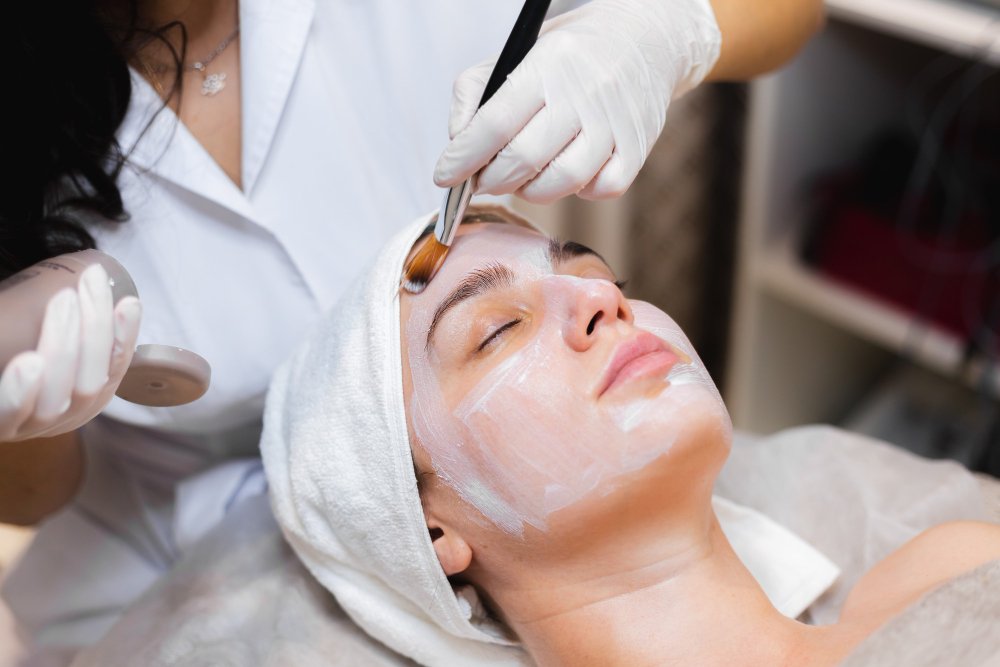
First Visit to a Medical Spa in Atlanta: What to Expect
Visiting a medical spa for the first time can be both exciting and a little intimidating. If you’re considering treatments such as skin rejuvenation, laser procedures, or injectables, knowing what to expect can help you feel confident and prepared. A medical spa Atlanta residents trust combines the relaxation of a traditional spa with advanced medical-grade treatments, all performed under professional supervision.What Is a Medical Spa?A medical spa, also known as a med spa, offers aesthetic treatments that go beyond what a day spa provides. Services are typically overseen by licensed medical professionals, such as physicians, nurse practitioners, or registered nurses. Common treatments at a medical spa Atlanta location may include Botox and dermal fillers, chemical peels, laser hair removal, body contouring, and advanced facials.The environment is designed to be calming and luxurious, while still maintaining strict medical standards for safety and hygiene.Initial Consultation and Skin AssessmentYour first visit to a...